
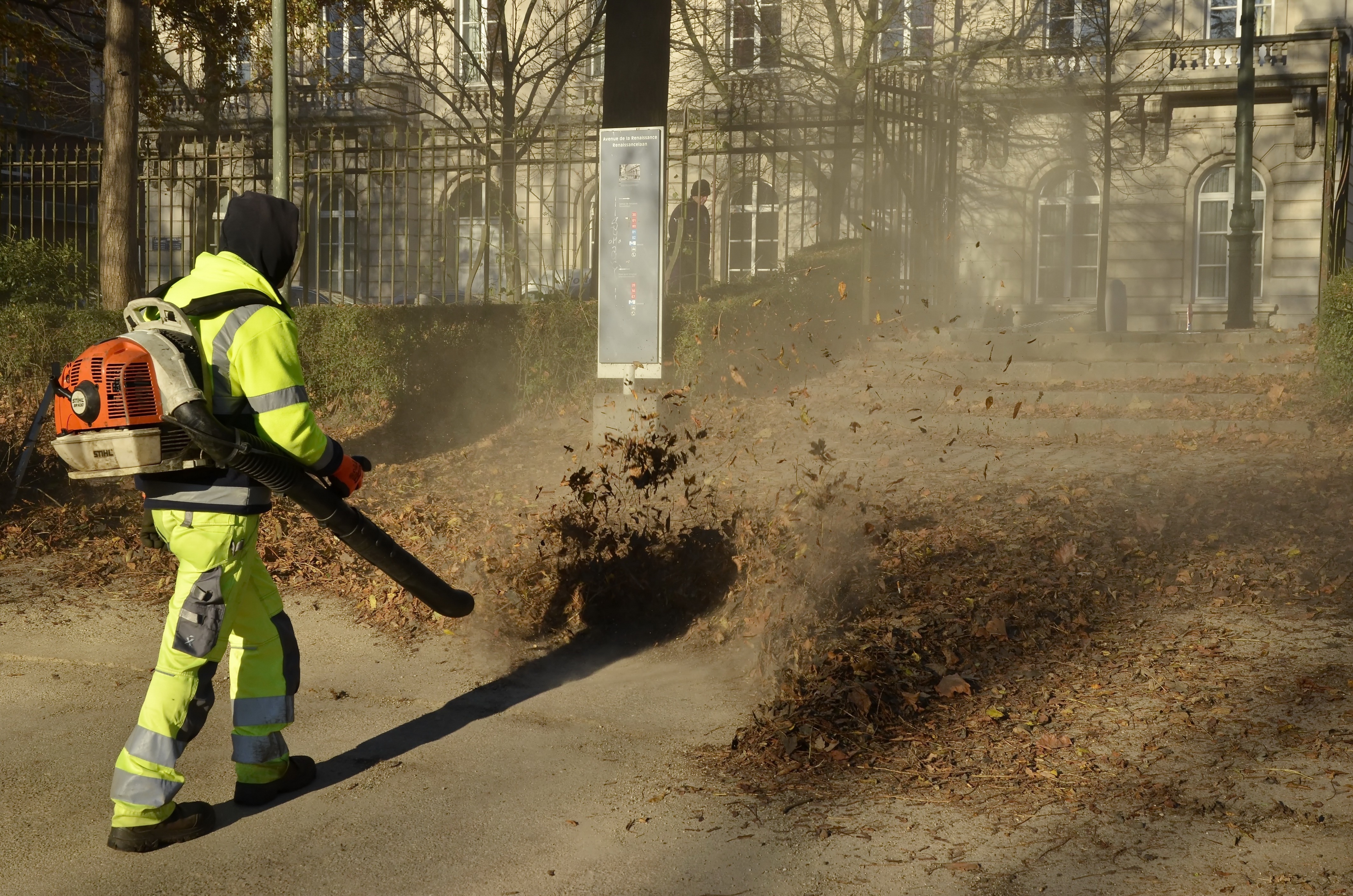
A Few Quick Facts About Leaf Blowers
Air Pollution
- Outdated 2-stroke engines in gas leaf blowers produce large amounts of smog-forming and carcinogenic emissions, putting people at risk for cancer and cardiovascular disease, and aggravating respiratory illnesses like COPD and asthma. See: Leaf Blowers Leave Lungs Vulnerable. (Note that 2-stroke engines are common in many handheld tools, such as string trimmers and hedge clippers. We focus on leaf blowers because of the combination of noise, emissions from the engine, and airborne pollution from the nozzle, and because they have ready alternatives, but all 2-stroke engines should be retired wherever possible.)
- Leaf blowers also stir up pollen, mold, fecal matter, pesticides, heavy metals, and dust which can linger in the air for days.
- A recent report found that lawn and garden equipment in Rhode Island produced an estimated 72,640 tons of carbon dioxide, 58 tons of fine particulates, and 182 tons of nitrogen oxides in 2020.
- Landscape industry workers are most at risk from longs hours of exposure to toxic emissions and dangerous noise every day
Noise Pollution
- Gas leaf blowers typically produce 80 – 115 decibels of noise, loud enough to cause hearing loss within hours, and well above sound levels deemed safe by organizations such as World Health Association and Centers for Disease Control. A single leaf blower can impact up to 90 homes at once.
- Noise is not just an annoyance; it is a public health problem. Besides causing hearing loss, noise increases risks of cardiovascular disease, heart attack and stroke, and is linked to poor mental health, lowered immunity, and impaired learning.
Harm to soil, plants, and wildlife
- High velocity air streams blow away topsoil and dry out plant tissue and roots, leaving lawns and gardens less healthy, while destroying the natural organic layer that protects and nourishes plants and wildlife.
- The noise of leaf blowers disrupts communication that wildlife relies on for survival.
Alternatives Exist
- Electric leaf blowers are fully capable of replacing gas models. They are quieter, less polluting, and cheaper to operate. Upfront costs may be higher, but lower operational costs mean they pay themselves off within a year and begin saving money over gas-fueled models.
- Many successful landscaping businesses operate using only electric equipment. Even Brown University manages its 146 acres with battery-powered landscaping tools.
- Leaf blowing can be minimized: Leaves left around shrubs, trees, and garden beds, nourish and protect soil, and provide valuable habitat for pollinators. Grass clippings and mulched leaves are beneficial when left on grass.
- Vacuums, sweepers, and brooms can be used for clearing hard surfaces. These make more sense than blowing debris around!
Change Is Possible
- Hundreds of cities nationwide have passed laws to restrict gas leaf blowers, including Washington DC, Portland, OR, Baltimore, MD, Evanston, IL, and White Plains, NY.
- Beginning in 2024, California will prohibit sales of new gas-powered lawn and garden equipment
Learn More
For more in-depth information, see this excellent overview of research and this guide to alternatives. James Fallows’ September Song: The 50 Autumns of the Leaf Blower provides an overview of the issues surrounding leaf blowers and several examples of successful campaigns to ban them.
Quiet Clean RI
info@quietcleanri.org
 Quiet Clean RI